|
船長 Willem Janszoon が指揮する小さな帆船「Duyfken」号は、現在はインドネシア領となっている「香料諸島」
(スパイス・アイランド)を出帆し、1606年初めにオーストラリア大陸沿岸を初認し、上陸を果たした。
これは、記録に残るものとしては、ヨーロッパ人による初めての陸地初認(landfall)であった。また船長Janszoonはカーペンタリア湾
のヨーク岬西岸域の330平方kmの地図を作成した。地図上にオーストラリアを書き込んだ初めての船である。
また、原住民(Aborigian people)と遭遇し、小ぜり合いをした初めてのヨーロッパ人でもあった。
[参考]
/landfall: n.[海]陸地初認、長い航海の後初めて陸地を認めること; 陸岸取り付き[航行中の陸岸初認].
・ a bad lanfall: 予定時刻に陸地を認めないこと.
・ a good landfall: 予定時刻に陸地を認めること.
・ the anniversary of Christopher Columbus's landfall in the Bahamas 500 years ago: 500年前クリストファー・
コロンブスがバハマ諸島の陸地初認を行った記念.
/to make a landfall: 陸地を認める.
/to make a landfall in what is today Namibia: 今日ナミビア[アフリカ南西の国]とされる陸地を視認する.
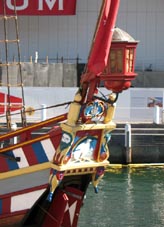
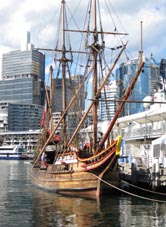
オーストラリア国立海洋博物館作成・配布(2011年4月)の「Duyfken 1606
Replica」と題する復元船「Duyfken」案内パンフレットには下記の通り記されている。
In early 1606 a small Dutch ship called Duyfken (Little Dove), commanded by Captain Willem Janszoon,
sailed from the Spice Islands in today's Indonesia and made the first recorded European landfall
on the Australian coast.
Janszoon and his men charted 330 kilometres of Cape York Peninsula's western coast in the Gulf of Carpentaria,
landed and skirmished with the local people. The Indigenous custodians of Cape York have passed this story
down through generations...but it has otherwise been a little-known part of Australian history.
This replica was built to convey that history, and to learn more about the shipbuilding and seamanship of
those times.
[2011.04.04-12 オーストラリア国立海洋博物館にて][拡大画像: x23434.jpg]
|
 Back to: Top Page |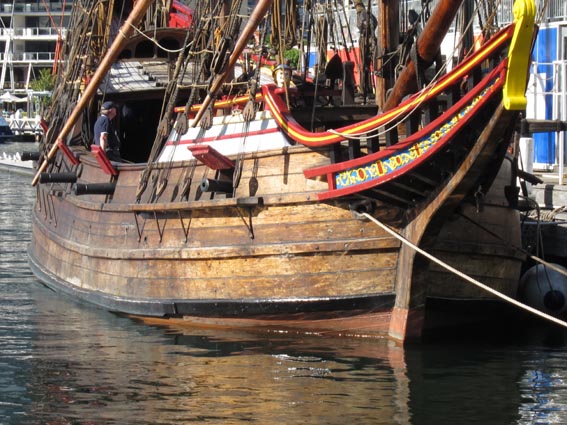
 2
2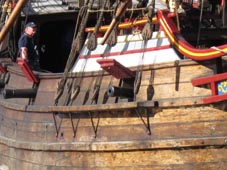 3
3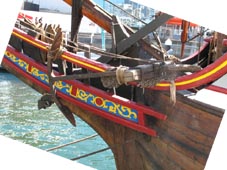 4
4